

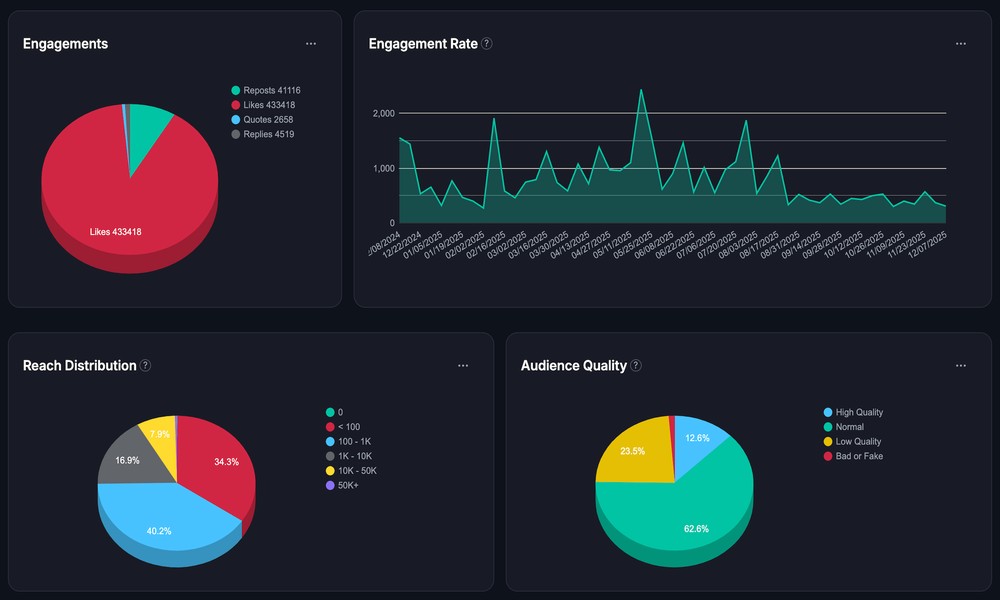

What drives account engagement?
Consistent posting patterns and tracked engagement data drive measurable account growth over time. Uploading content without tracking what follows leaves creators working blind. Growth numbers alone tell an incomplete story. The patterns behind them reveal far more about what an audience actually responds to. Creators using a เว็บปั้มฟอล alongside consistent content output begin to see correlations that random posting never surfaces. Audiences return to accounts that arrive on schedule. What the engagement data shows afterwards is not just performance history but a working map of what that specific audience finds worth stopping for and coming back to.
Data shapes direction
Growth on Instagram rarely moves in straight lines. Accounts spike after certain posts, plateau through others, and occasionally dip without an obvious cause. Those fluctuations expose audience behaviour that triggers interaction, what prompts unfollows, and what quietly drives saves without generating visible noise in the comments.
Three patterns appear consistently across growing accounts:
- Interaction clustering – Engagement concentrates around posts published at specific times, not randomly across the week. Mapping this clustering reveals audience active windows far more accurately than any general guide suggests.
- Save-to-like ratio shifts – When saves outpace likes on a post, the content has hit something worth returning to. That ratio climbing over time signals reference-worthy material, which the algorithm treats differently from content that generates only quick reactions.
- Profile visit spikes – A sharp increase in profile visits after a specific post type reveals which content format drives curiosity beyond a single piece, pointing directly toward what new audiences find compelling enough to investigate further.
Reach vs retention
Reach and retention measure two different things, and tracking both together produces a clearer picture of actual growth health.
- Reach counts how many accounts a post touched during its distribution window, reflecting visibility across the platform.
- Retention measures how many of those accounts returned to the profile afterwards, reflecting whether the content created lasting interest.
- A post reaching fifty thousand accounts but generating minimal followers suggests the content attracted the wrong audience or failed to communicate what the account covers.
- A post reaching five thousand accounts but converting a high percentage into followers points toward content resonating with the right people.
- Optimising for reach without watching retention produces inflated numbers that do not translate into durable growth over time.
Timing shapes response
- Post timing influences engagement more directly than most creators account for. Publishing outside an audience’s active hours means the first-hour interaction window passes without enough signal to trigger broader distribution, since Instagram weighs that window heavily in its distribution decisions.
- Accounts that test different publishing times over four to six weeks and track first-hour performance by slot build a reliable picture of when a specific audience is most responsive. That picture rarely matches platform-wide averages.
Audience behaviour is account-specific, shaped by geography, age range, and content category. General posting time advice provides a starting point, nothing more.
Reading marks over time
Single-post performance offers limited insight. Patterns across thirty or sixty posts reveal something far more actionable. Consistent underperformance on a specific content format signals audience preference clearly, even when that format feels creatively worthwhile to produce.
Growth data interpreted over time removes guesswork from content decisions. The account stops chasing trends and starts responding to what its own audience has already demonstrated it values, producing a more stable and measurable development path than reactive content creation ever allows.
